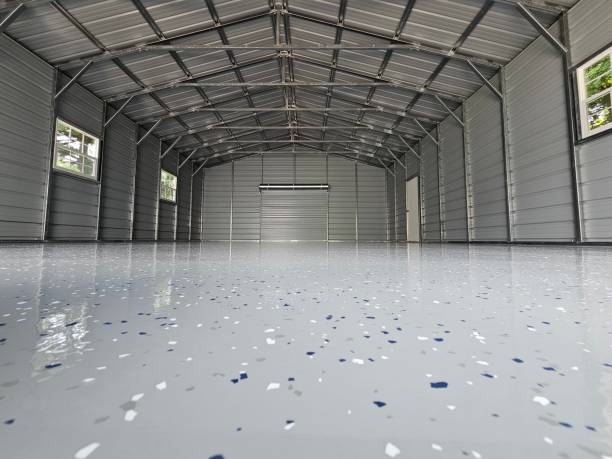
Thickness affects how well a coating handles traffic, impact, chemicals, and daily wear. A professional system should match the condition of the concrete and the way the space will be used rather than follow one standard measurement. Applying extra material does not automatically create a better floor, since each layer must cure properly and bond to the one beneath it.
How Thick Is a Typical Epoxy Flooring System?
Professional epoxy flooring systems may range from a thin protective coating to a multi-layer build measuring several millimeters. Light-duty applications often use thinner systems, while garages, workshops, warehouses, and production areas need greater depth to withstand heavier stress.
Measurements are usually stated in mils, with one mil equal to one-thousandth of an inch. Contractors calculate the final dry film thickness instead of judging the floor by appearance alone. Product solids, application rate, aggregate, broadcast flakes, and topcoats all contribute to the completed build.
Thin Coatings Work Best Under Limited Wear
A thin coating can improve appearance and make concrete easier to clean, but it offers less protection against abrasion and impact. Such systems may suit storage rooms, utility areas, or lightly used spaces where heavy equipment and constant traffic are absent.
Problems arise when epoxy floor companies install a light coating in an area that needs a stronger build. Hot tires, rolling toolboxes, dropped objects, and road grit can wear through a weak epoxy garage floor sooner than expected. Surface preparation still matters because even a thicker product will fail if it cannot bond to the slab.
Residential Garage Floors Need Balanced Protection
Garages face more stress than many indoor residential floors. Vehicle weight, turning tires, engine fluids, salt, sand, and temperature changes all place pressure on the coating throughout the year.
A suitable garage system often includes:
- A penetrating primer or base coat
- A pigmented epoxy or polyurea body layer
- Decorative flakes or traction media
- A durable clear protective topcoat
- Added build around repaired cracks and worn areas
Property owners searching for an epoxy garage floor near me should ask about total system thickness rather than the depth of one coat. Multiple correctly applied layers usually perform better than one heavy application that cures unevenly.
Commercial Floors Require More Than Added Material
Commercial epoxy flooring must support the actual workload of the property. Retail areas may need resistance to foot traffic and cleaning chemicals, while warehouses require stronger protection from forklifts, pallets, carts, and concentrated loads.
Designing the right system means considering:
- Traffic type and frequency
- Expected impact levels
- Chemical or oil exposure
- Cleaning methods
- Slip-resistance needs
- Downtime available for curing
Managers comparing epoxy floors near me should request a written system specification. That document should identify each coat, its purpose, coverage rate, and expected dry thickness.
Why One Thick Coat Can Create Problems
Pouring epoxy too heavily may trap air, increase heat during curing, or leave soft material beneath a hardened surface. Excessive depth can also cause sagging, uneven texture, discoloration, or longer cure times.
Controlled application gives installers better results. Squeegees, rollers, notched tools, and measured coverage rates help maintain a consistent layer across the slab. Experienced crews also mix smaller batches when warm conditions shorten the working time.
Surface Condition Changes the Required Build
Damaged concrete may need repairs, patching, or resurfacing before the coating system begins. Deep pits and low areas should not be filled by simply pouring more epoxy across the entire floor.
Uneven slabs often require separate repair compounds because coating resins are designed for controlled film thickness. Contractors found through an epoxy flooring near me search should inspect cracks, joints, moisture, and surface hardness before recommending a system. Those findings determine whether the floor needs a primer, body coat, aggregate layer, or additional topcoat.
Decorative Broadcast Systems Add Measurable Depth
Flake and quartz systems gain thickness through aggregate broadcast between resin layers. The particles become locked into the coating, increasing wear resistance, hiding minor surface variation, and improving traction.
Full-broadcast floors usually build more depth than lightly scattered decorative finishes. After the material cures, installers scrape or vacuum away loose aggregate before sealing the surface. Topcoat thickness then affects texture, cleanability, gloss, and protection against abrasion.
Topcoats Protect the Epoxy Beneath Them
Epoxy provides strong adhesion and compressive strength, but certain formulations can discolor under ultraviolet exposure or scratch under constant traffic. Polyaspartic, polyurethane, or other compatible topcoats may protect the base while adding chemical and abrasion resistance.
Selecting the finish requires more than picking a gloss level. Indoor sunlight, cleaning agents, vehicle fluids, machinery, and slip concerns all influence the final layer. Searches for epoxy floors near me should lead to contractors who explain how the topcoat supports the entire system rather than treating it as a cosmetic extra.
Greater Thickness Does Not Replace Proper Preparation
Mechanical grinding or shot blasting gives epoxy flooring a stable surface profile. Dust, oil, curing compounds, and old sealers must be removed because added coating depth cannot correct weak adhesion.
Moisture testing also remains necessary on thick systems. Vapor pressure beneath the slab can lift several layers at once, creating bubbles or broad sheets of delamination. Professional epoxy floor companies match preparation, primer selection, and coating depth to the concrete instead of relying on thickness alone.
System Thickness Should Match Real Floor Use
Reliable specifications account for the heaviest normal activity expected in the space. Residential garages need protection from vehicles and household projects, while industrial areas may demand aggregate-reinforced layers built for machinery, chemicals, and continuous movement.
Elite Coastal Epoxy installs residential, commercial, and industrial flooring systems based on slab condition and service demands. Its team can recommend the appropriate thickness for an epoxy garage floor or commercial facility, prepare the concrete, and apply each layer at a controlled rate for consistent performance.