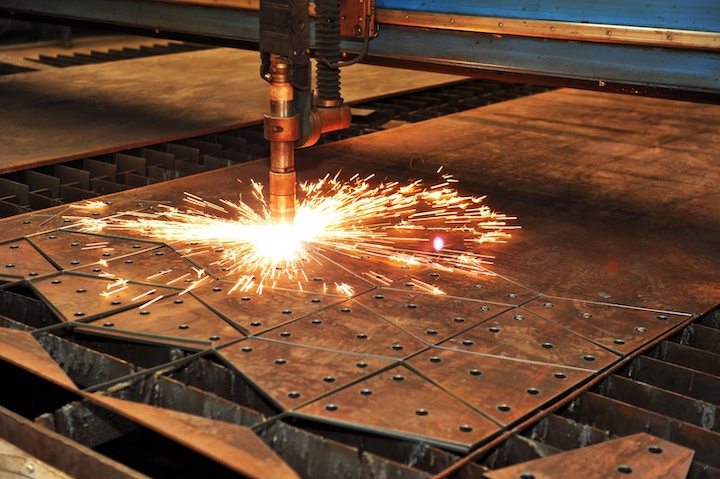
Metal fabrication demands more than speed; it requires steady control and repeatable results. Shops that rely on advanced cutting equipment often notice measurable gains in consistency and edge quality. A well-designed plasma cutter plays a direct role in achieving those outcomes by delivering focused energy exactly where it is needed.
Narrow Kerf Width Keeps Cuts Tight and Reduces Wasted Metal
Kerf width refers to the amount of material removed during cutting. A narrow kerf means less metal is lost as slag or scrap. Modern plasma cutter systems create a tight, concentrated arc that removes minimal material while still slicing cleanly through steel. Reduced kerf width also improves dimensional accuracy. Parts stay closer to their intended measurements, which matters when components must fit together precisely. A CNC plasma cutter, in particular, maintains consistent kerf width across long production runs, limiting material waste and improving yield on each sheet.
Stable Plasma Arc Holds a Straight Path Through Thick Steel
Cutting thick steel requires a strong and stable arc. If the arc wanders or fluctuates, edges become uneven and dimensions shift. A high-quality plasma cutter maintains arc stability through controlled gas flow and power regulation.
Steady arc behavior keeps the cut line straight, even in dense materials. CNC plasma cutting machine systems use software-guided motion to support that straight path. The result is a uniform edge that holds tolerance without excessive grinding afterward.
Controlled Heat Zone Helps Prevent Warping on Larger Sheets
Heat distortion is a common challenge in metal cutting. Excessive heat can cause large sheets to bend or warp, especially when working with thinner gauges. Plasma technology focuses heat in a smaller zone, reducing the spread of thermal energy.
Localized heating minimizes stress on surrounding material. A CNC plasma cutter paired with optimized settings can further limit distortion by controlling speed and arc intensity. Balanced heat input helps preserve flatness across larger plates.
Clean Cut Edges Lessen the Need for Heavy Post Work
Rough edges demand additional finishing. Grinding, sanding, and reshaping consume labor and increase production time. A well-tuned plasma cutter produces smoother cut surfaces with minimal dross.
Cleaner edges allow parts to move directly into assembly or welding stages. Shops working with CNC companies near me often value machines that cut cleanly the first time. Reduced post-processing saves time and protects the integrity of the finished component.
Precise Torch Control Makes Small Shapes Easier to Follow
Intricate designs challenge cutting equipment. Fine curves and tight corners require accurate torch positioning. CNC plasma cutting machine systems use programmed motion paths to follow complex outlines with minimal deviation.
Precise torch control supports detailed fabrication projects. Whether creating brackets or custom panels, a stable plasma cutter responds quickly to directional changes. Fine control makes small shapes easier to produce without sacrificing accuracy.
Even Penetration Depth Keeps Plates Uniform End to End
Uneven penetration can leave partial cuts or irregular edges. Consistent depth ensures the material separates cleanly along the entire cut line. A high-quality plasma cutter regulates arc intensity to maintain even penetration.
Uniform depth matters in both thin and thick materials. CNC plasma cutter setups monitor voltage and current to adapt as needed. Balanced penetration produces smooth edges and consistent part dimensions from start to finish.
Quick Arc Start Improves Accuracy at the Beginning of Each Cut
The start of a cut often determines overall quality. Delayed arc ignition or hesitation can create irregular entry points. Modern plasma cutter systems feature rapid arc start mechanisms that initiate cutting cleanly.
Clean starts reduce imperfections at the leading edge. A CNC plasma cutting machine can time the arc start precisely with programmed motion, ensuring smooth transitions into the cut path. Accurate beginnings set the tone for accurate finishes.
CNC Integration Allows Repeat Cuts with near Identical Results
Repeatability defines industrial accuracy. Manual cutting may vary slightly from piece to piece, but CNC plasma cutter systems store and replicate precise motion paths. This automation ensures each part matches the digital design.
Integration with design software enhances consistency. Many CNC machine company platforms support detailed programming that translates directly into controlled movement. Shops searching for CNC companies near me often prioritize equipment capable of producing identical results across large batches.
Clear View of the Cut Line Helps Operators Stay on Mark
Operator visibility remains important, even in automated systems. A clear view of the cut line allows technicians to monitor progress and adjust if necessary. Plasma arcs generate less obstructive debris compared to some other methods. Improved visibility contributes to real-time quality checks. Skilled operators working with a plasma cutter can maintain awareness of edge alignment and surface condition throughout the process. That oversight supports both manual and CNC plasma cutter operations.
Amtec Solutions Group provides advanced plasma cutter systems designed to support consistent fabrication accuracy across demanding applications. Their team offers CNC plasma cutting machine solutions that combine stable arc control with dependable repeatability. With technical guidance and reliable equipment options, Amtec Solutions Group helps fabrication facilities strengthen output quality and maintain tight production standards